I Vibe Coded an Airbnb Clone with Lovable. Here's What I did before I started.
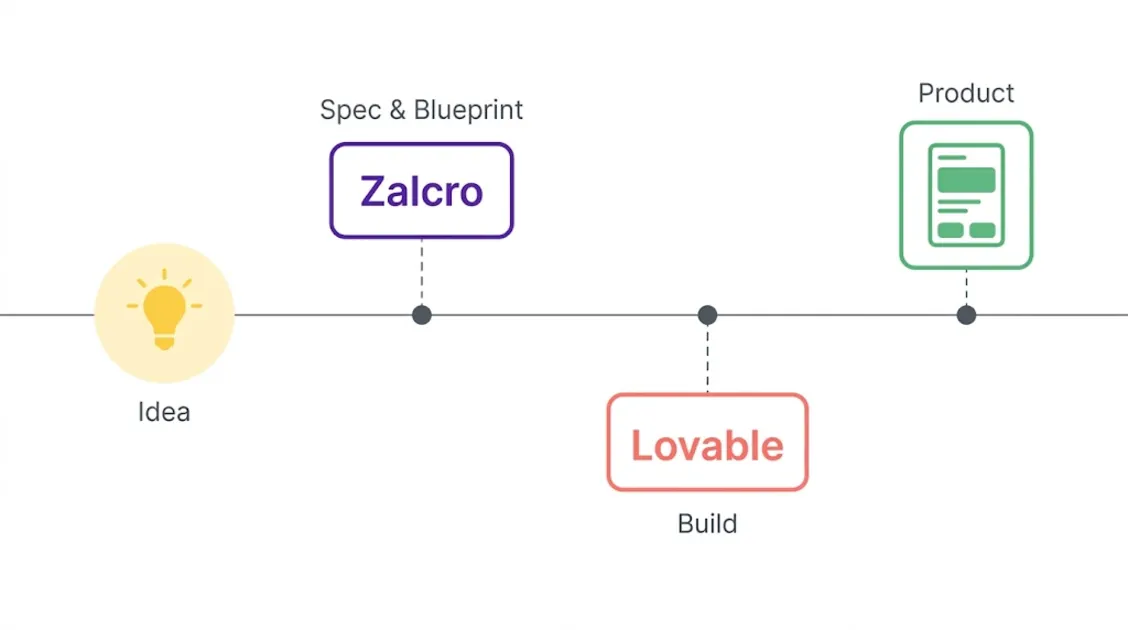
BLUF: Lovable can create a complex, two-sided marketplace, but it cannot make the hard architectural decisions for you. This post walks through the exact decisions I made before using Lovable to build Homestay, a production-ready vacation rental marketplace.
Most people who try to build something like an Airbnb clone on Lovable hit the same wall. The first few screens come together quickly, search results, listing cards, booking form and they look right. Then they try to connect the calendar to the payments, or add host dashboards, or handle what happens when two people book the same night at the same time, and the whole thing starts to unravel. Lovable loses the thread, you re-explain a decision you made three prompts ago, and something you didn't touch breaks. You realize you're no longer building, you're debugging an AI that's lost context on its own output.
I went through this myself while building Homestay, a two-sided vacation rental marketplace where the hosts list properties, the guests book and pay, including automated payouts, admin controls, the whole thing. The reason it didn't fall apart wasn't because I'm a better prompter than you. It's because I didn't start with Lovable. Here's what I did instead.
I made the hard decisions before starting.
The decisions that break Lovable apps aren't prompt decisions. They're architectural decisions, the kind that, once you get them wrong, can't be fixed by prompting your way out. They have to be rebuilt from scratch. For Homestay, three of those decisions mattered more than everything else.
Data privacy. In a two-sided marketplace, guests and hosts each have data the other should never see, booking details, payment history, contact information. Lovable will build you beautiful screens. It will not, by default, make it impossible for one user to see another user's records. I locked those rules into the database itself, not the user interface. Even if Lovable generated a buggy screen, the data couldn't leak. The security didn't depend on the AI getting it right every time.
Double-bookings. This is the hardest problem in any rental app. If two guests click "Book" at the same moment, you can't solve it in the app layer. By the time your code checks availability and writes the booking, someone else's code may have already done the same thing. The only real solution is a database-level constraint that makes overlapping bookings impossible. I set that up before Lovable wrote a line. The AI didn't have to solve the calendar problem.
Payouts. Stripe Connect lets you hold funds in your platform account and release them to hosts later, but Lovable won't wire that up correctly without very explicit guidance on when money moves and why. I decided that rule before prompting: funds release to the host automatically after guest check-in, triggered on a schedule, not by a user action. The AI just had to implement a decision I'd already made.
I built it one phase at a time.
Getting the architecture right doesn't help if the AI tries to build it all at once. The biggest mistake I see founders make with Lovable is trying to build the whole thing in one session. You end up with pretty UI that doesn't actually wire together, and logic that falls apart when features start interacting.
I built Homestay in eight phases, in order, and I didn't move to the next one until the current phase was actually working. Database and security rules first. Then user accounts. Then the marketplace. Then bookings and payments. Then host dashboards. Then the automated background jobs. Then admin controls. Then launch prep.
That order isn't arbitrary. Each phase assumes the one before it is solid. If you try to build payments before you've validated authentication, you'll spend three times as long debugging because you won't know which layer the bug is in.
I didn't make these decisions alone. I started with Zalcro before I opened Lovable. Zalcro walked me through a conversation about Homestay, then generated the architecture, the system diagram, and an 8-phase Prompt Pack to paste into Lovable one after the other. By the time I started in Lovable, the hard decisions were already made.
Why it worked.
I wasn't asking the AI to figure out how the app should work. I was asking it to build something I'd already figured out. That's a completely different relationship with the tool.
Lovable is fast. It's genuinely impressive. But it works better as a builder, not an architect. Give it architecture, and it builds quickly and cleanly. Ask it to be the architect, it will try, and it will get 80% of the way there before the whole structure starts to shift under you.
Want to see the full Homestay blueprint? The architecture, the dependency-ordered tickets, and the 8-phase Prompt Pack are all live at zalcro.ai/samples/homestay-vibe-coding-mvp.
If you're about to start a Lovable build and you want the same thing for your app, that's what Zalcro does. Free to start at zalcro.ai.
Keep reading: